Do I need any previous experience?+
No. Most people who walk through our door have never trained before. Classes are structured so beginners learn the same fundamentals experienced students keep refining, and instructors introduce material at a pace new students can follow.
Am I too old to start?+
Our adult program is built around leverage, timing and position rather than speed or athleticism, which is exactly why adults in their thirties, forties, fifties and beyond train here successfully. Tell your instructor about any injuries or limitations and the material will be adjusted.
Is this Brazilian Jiu-Jitsu?+
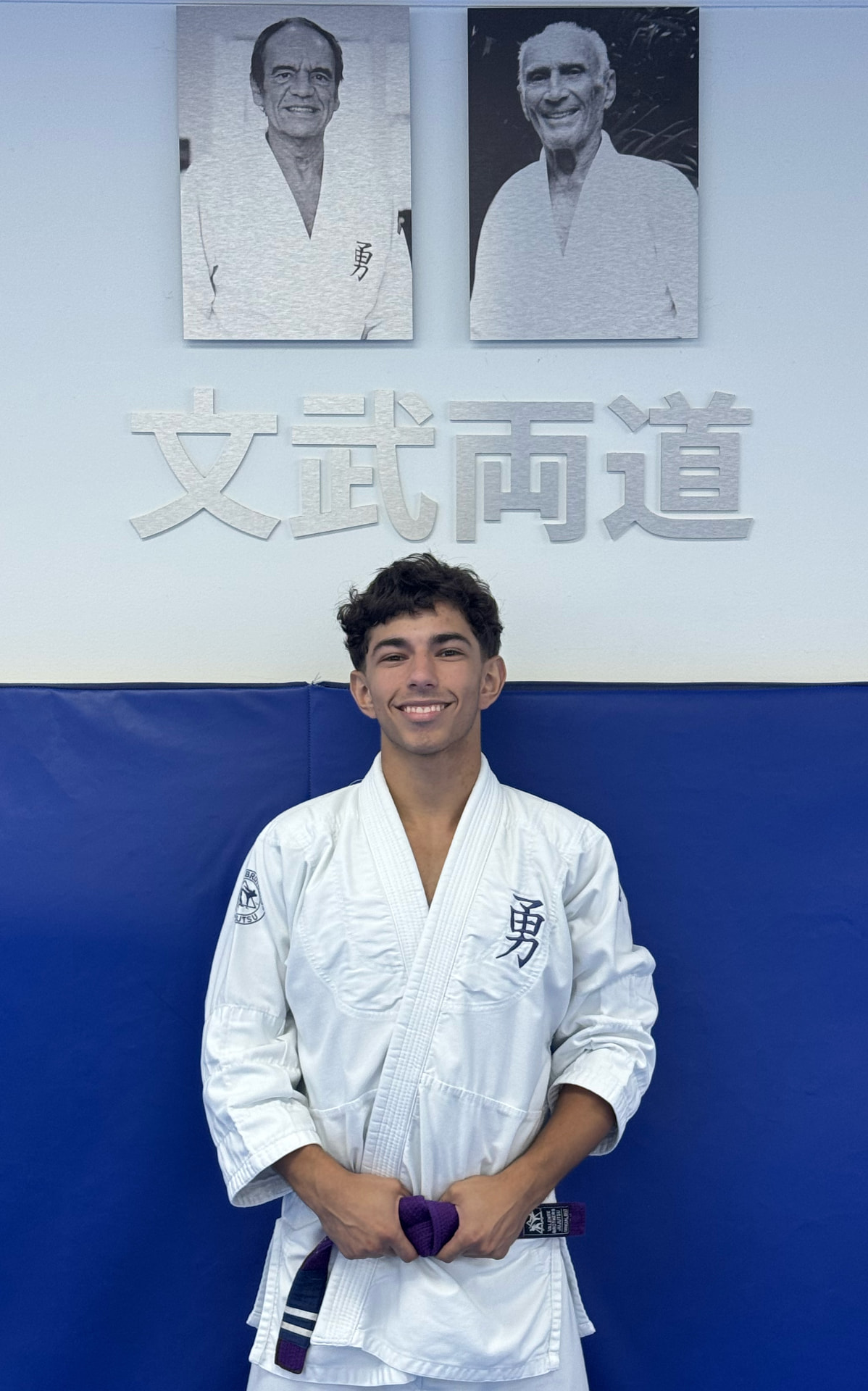
We teach Valente Brothers Jujutsu, which shares its lineage and much of its technical vocabulary with what most people call Brazilian Jiu-Jitsu or BJJ. The difference is scope: our curriculum is a complete self-defense system that also covers standing defense, surprise attacks, defense against striking, clinching, throws and takedowns, alongside ground grappling.
What is the difference between Jujutsu and Jiu-Jitsu?+
They refer to the same art. “Jujutsu” is the traditional Japanese romanization and the spelling we use; “Jiu-Jitsu” and “Jiu Jitsu” are the spellings that took hold in Brazil and the United States. If you searched for Jiu-Jitsu in Pembroke Pines and landed here, you are in the right place.
Is the program focused on sport or self-defense?+
Self-defense. We are not a tournament-focused academy. We hold sport Jiu-Jitsu and competitive grappling in high regard as disciplines in their own right, but our curriculum is organized around defending yourself in ordinary, unplanned situations.
Is training safe?+
Safety and training longevity are central to how classes are run. Technique is introduced progressively with cooperative partners, and the focus stays on preserving the body so students can keep training for years rather than months.
Can women train here?+
Yes. The adult program is designed equally for men and women, and the leverage-based approach is one of the reasons the material works well for smaller practitioners defending against larger opponents.
Can my family train together?+
Many of our families do — parents in the adult classes and children in the youth program. Call or message us and we will help you find a combination of class times that works for your household.
Are private lessons available?+
Yes, for both adults and children. Private lessons follow the same curriculum in a one-on-one format and can be used on their own or alongside group classes.
How does the free introductory class work?+
Choose adult or youth, pick a time, and give us your contact details. We will confirm your spot and send you what you need to know before you arrive. There is no experience required and no equipment to buy in advance.
Where are you located?+
12191 Taft Street, Pembroke Pines, FL 33026. We serve students from Pembroke Pines and the surrounding Broward County communities including Miramar, Cooper City, Southwest Ranches, Davie and Weston.
Is Jujutsu good for self-defense?+
Yes — it is one of the most practical martial arts for it, because it relies on leverage, timing and position rather than size, strength or speed. Beginners of any age can train it, and the curriculum is organized around real, unplanned situations rather than a competition ruleset.
Do you teach MMA?+
No. MMA is a professional combat sport between trained athletes under rules, weight classes and a referee. We are a self-defense school teaching adults, women and children how to protect themselves in situations that have none of those things.